Online company stores for Canadian enterprise brands
We build the store, hold the stock at our North York warehouse and ship every order to the person who placed it. Your team never touches an order.

Four people decide whether a company store works
A store touches four jobs inside the business, and it only gets signed off when all four get something out of it.
Where company store programs break down
Three problems turn up in almost every company store brief we are handed by a Canadian enterprise brand.
See the store, not just the kit
This is what your people open. A branded storefront on your own URL, carrying only the items you approved, with the sizes and colours already set.
Someone signs in, picks their size, enters the address it should go to and checks out. There is no order form to fill in and nobody to email.
Marketing sees the range it signed off. Procurement sees the rules it set. Nothing outside that can be ordered.
Walk through a store build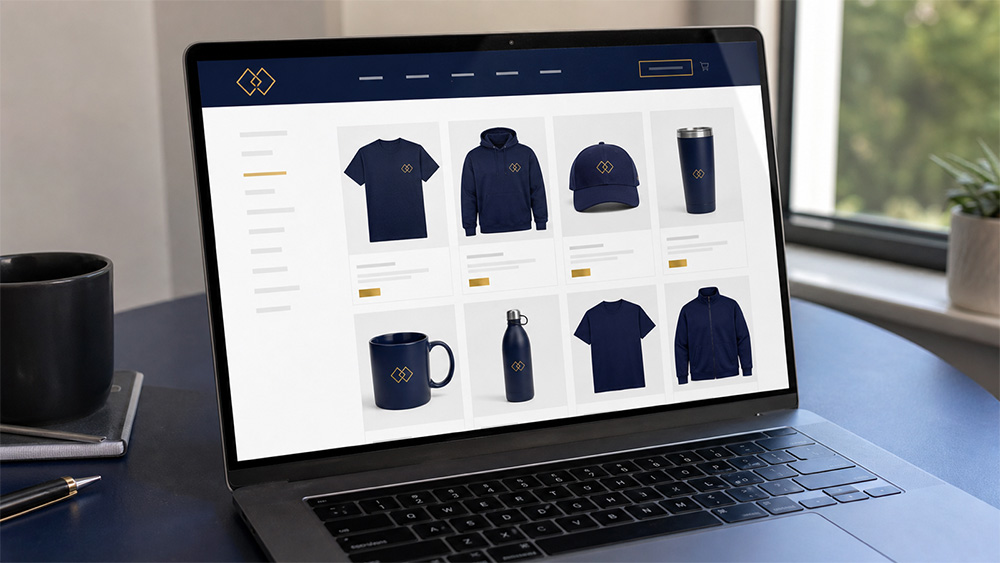
Three kinds of store we build and run
Same storefront, same warehouse, three different sets of rules about who may order and what they may spend.

Employee swag stores
Your team signs in, picks from a catalogue built to your brand standards, and the order ships to their home or their office.
The range is yours. Apparel, headwear, drinkware, notebooks and bags, whatever the program actually needs. Sizes and colours are held as standing inventory, so a new hire in June gets what a new hire in January got.
Nobody on your side raises a purchase order, chases a supplier or packs a box.
Price an employee storeFrom first call to a store that runs itself
Three stages. The first one is a conversation, and the last one never ends up back on your desk.
Dealer, rep and channel stores
Dealers, reps and franchise locations order what they need themselves, inside the budget or the allocation head office gave them.
Every item is the approved version, decorated to the same standard, so what a rep hands over in one province matches what another hands over in the next.
Kitting and shipping run from North York, and the activity comes back to you as a report rather than a pile of forwarded email.
Scope a dealer store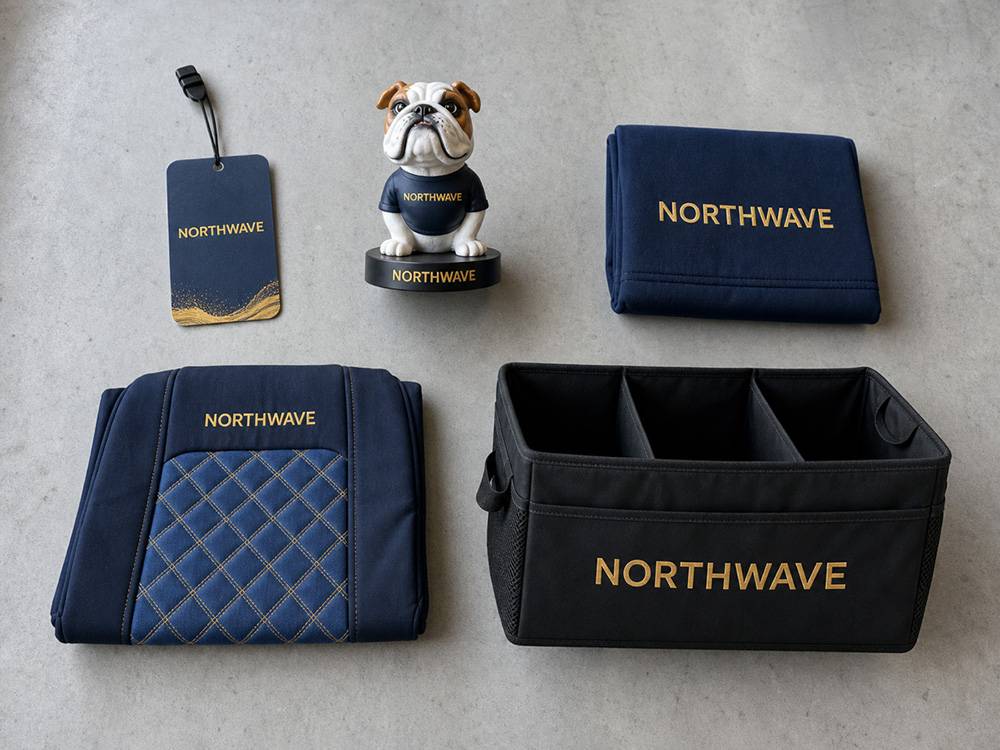
What a managed store does that a swag platform does not
Both give you a storefront. The gap shows up in what sits behind it once real orders start arriving.

Client gifting and event stores
A store that opens for a season, a conference or a client list, then closes on a date you set.
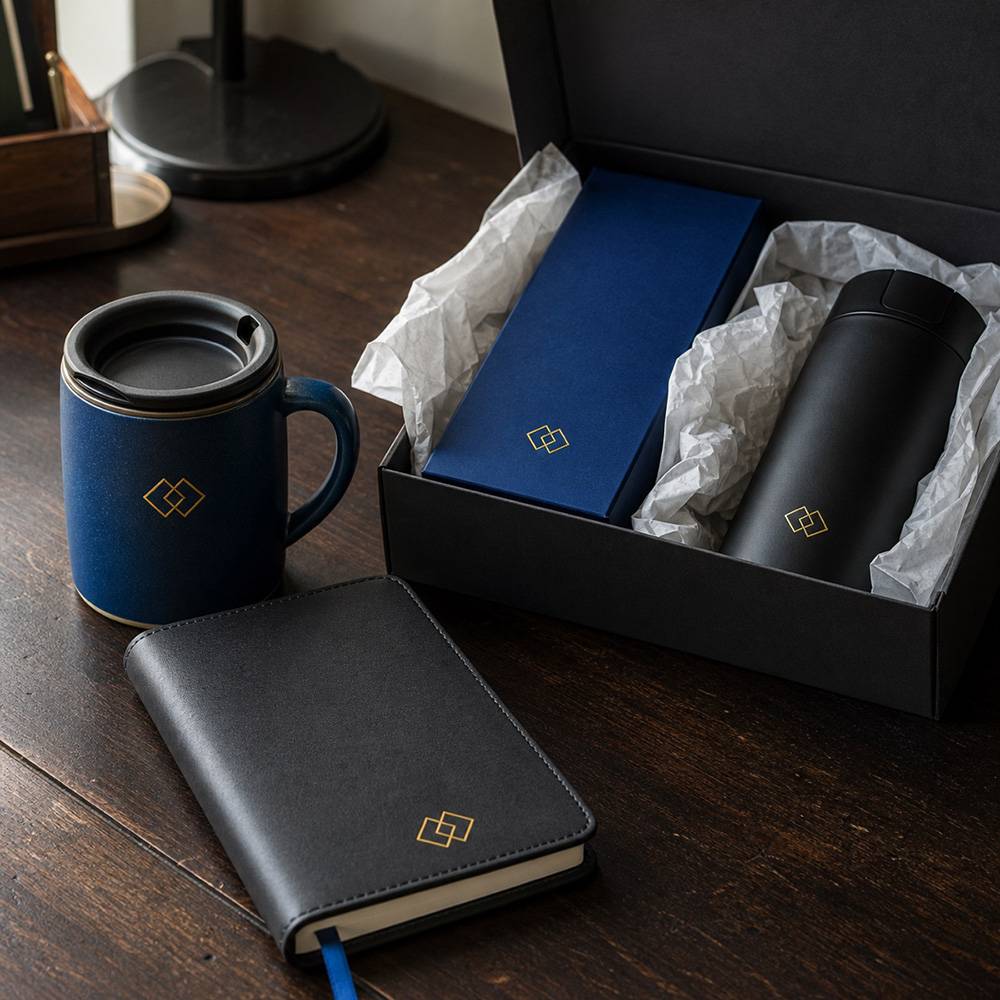
Gift packaging and presentation boxes are part of the build, agreed with the range rather than added at the loading dock.
Orders go to one address or to hundreds across Canada, and anything left at the close stays on our shelves under your account for the next program.
Plan a gifting storeAn order on the store is a shipment, not a batch
There is no minimum order count and no purchasing cycle to sit through before a person gets what they ordered.

Standing inventory at our North York warehouse
Your stock sits on our shelves, counted and ready, rather than in a cupboard behind somebody's desk.
Every order is picked, packed and couriered to the address on it, anywhere in Canada. Stock levels are watched on your behalf and lines are reordered before they run out.
See how fulfilment worksWhere a store sits in the rest of the program
A store is one piece of it. Decoration standards, warehousing and the recognition calendar all sit around it, and these pages cover each of them.
What comes out of a 30-minute call
No catalogue drop and no quote chase. If the call turns out not to be useful to you, that is the end of it.
Frequently asked questions
What is an online company store?
A private branded storefront on your own URL, carrying only the items you approved. Your people, dealers or clients sign in, order for themselves and enter the address it ships to. We build it, hold the stock and fulfil every order.
How long does it take to set up a company store?
It depends on the program. A straightforward store is quick, and a large catalogue or custom packaging takes longer. We confirm the timeline with you when we scope the store, and a rush setup is often possible.
Is there a minimum order volume?
There is no minimum on an individual order. Standing inventory is sized during setup against the order cadence you expect, so single orders are the normal case rather than the exception.
Can employees pay by credit card, or does it have to go through procurement?
Both work. We run open storefronts that take card payment, voucher and allocation programs where head office funds the balance, and purchase order flows where procurement is the payer.
Can different groups or regions see different catalogues?
Yes. Catalogue views by role or region, budget allocations and access controls are all set during the build and can be changed once the store is running.
Where is the stock held and how does it ship?
Stock is held at our North York warehouse under your account. Orders are picked, packed and couriered to any Canadian address, to one person or to hundreds.
Who manages the store once it is live?
We do. Order fulfilment, stock replenishment, decoration consistency and supplier management sit with us. Your side approves the range and the rules, then uses the store.
Can we run a dealer store and an employee store at the same time?
Yes, and most brands eventually do. They can share a catalogue or run entirely separate ranges, with different budget rules on each, and they stay on one account and one invoice.
What happens to inventory left over when a program ends?
That is agreed before the store opens, because it depends on the value of the stock and how often the store reorders. It can be held for the next program, redistributed, returned or cleared.
Thinking about a company store?
Tell us who should be able to order, what they should be able to order and where it has to ship. We will come back with the store type, a first catalogue scope and a stock plan.