Key takeaways
- A welcome kit tells a new hire the company thought about them before their first day, which is when their first impression is still forming.
- Three to five well-chosen items in good packaging read as more intentional than a large box of generic merchandise.
- Apparel is the anchor item, so sizing has to be collected during offer acceptance.
- Remote onboarding turns one office drop into individual home deliveries timed against each start date.
- Par levels set per item and per size keep the popular sizes in stock when a cohort starts.
New employee welcome kit ideas for Canadian enterprise brands: what to include and how to ship them
A new hire's first impression of a company is formed before their first day ends. The physical experience of starting a job, what they receive, how it looks, and how it arrives, contributes to that impression more than most HR programs account for. A well-executed welcome kit tells a new employee that the company thought about them before they walked in the door. A bad one, or the absence of one, says the opposite.
This guide covers what goes into a new employee welcome kit that actually works, with specific attention to remote onboarding, which changes the logistics requirements significantly.
Why welcome kits matter more than they used to
The first weeks of a new job are when a new hire decides whether they made the right call. Replacing someone who leaves before they are fully productive means paying for recruiting and onboarding twice, so anything that helps those first weeks go well is worth getting right.
The physical onboarding experience is one of the higher-impact interventions because it is visible, tangible, and memorable. An employee who receives a quality welcome kit on day one has a data point that the company invests in the experience of working there. That data point arrives while their first impression is still forming.
For the broader context on how Willwerth Promotions builds onboarding programs for Canadian enterprise clients, the employee onboarding page covers the program structures we manage.
A well-executed welcome kit tells a new employee that the company thought about them before they walked in the door.
On why welcome kits matter
What to include in a new hire welcome kit
The standard welcome kit for most enterprise programs includes three to five items. More items are not always better; a hand-picked selection in good presentation packaging reads as more intentional than a large box of generic merchandise.
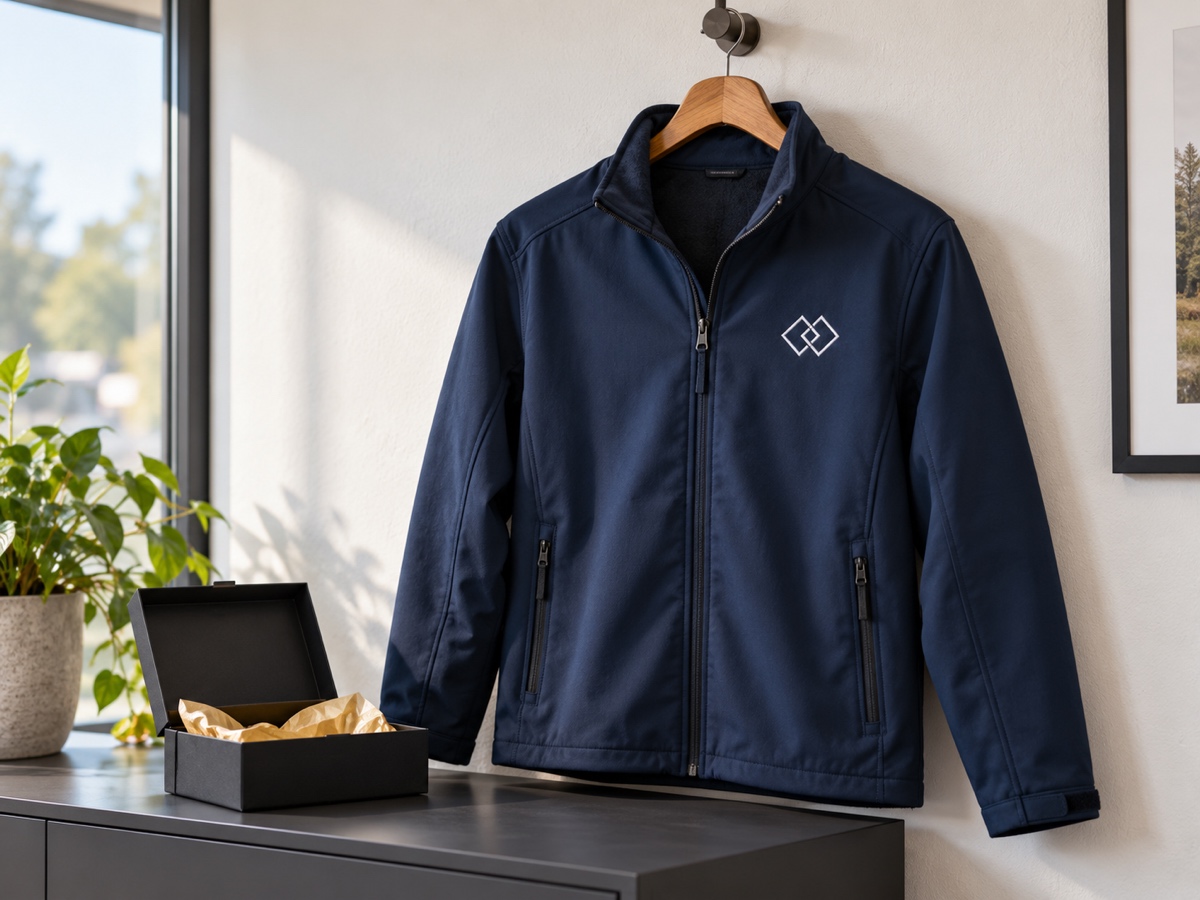
Branded apparel is the anchor item for most programs. A quality pullover hoodie, quarter-zip, or softshell jacket gives the new hire something they will wear, both representing the brand and signaling that the company thought enough to give them something useful to wear. Sizing is required, which means the onboarding process needs a sizing collection step, typically handled in the offer acceptance flow.
A branded notebook or journal is a reliable second item. It gets used in meetings and calls from day one. Quality matters: a notebook with good paper and a clean cover is kept. A thin spiral notebook with a logo printed on the cover is typically discarded by the second week.
A branded drinkware item, either a travel mug or an insulated tumbler, has high daily-use retention and does not require sizing. It becomes a visual anchor in video calls for remote employees and at the desk for office-based staff.
A brief personal note from the hiring manager or team lead, even a printed card, adds a human element that the branded items alone cannot provide. The content matters less than the fact of its existence. It signals that a person was thinking about the new hire.
What a three to five item kit looks like packed
The items below are the ones most enterprise programs settle on, and the presentation is doing as much work as the contents.
- Apparel. The anchor item, and the one that needs a sizing step in the offer acceptance flow.
- Drinkware. High daily use, no sizing to collect, visible on video calls and at the desk.
- A notebook worth keeping. Good paper and a clean cover get used from day one. A thin spiral pad gets thrown out by the second week.
- A note from the hiring manager. The content matters less than the fact that a person wrote it.
Remote onboarding kits: the logistics difference
Shipping welcome kits to remote employees is a different operational problem than handing them out at an office location. Each kit needs to reach an individual home address. Sizing information needs to be collected and matched to the right kit before fulfilment. The timing needs to align with the start date, arriving a day or two before the first day.
At small scale, this is manageable. At enterprise scale, it becomes a coordination challenge that quickly consumes HR bandwidth. Companies with high hiring volumes, hundreds of new hires per year, often find that manual coordination of welcome kits is one of the most frustrating operational burdens the HR team carries.
The solution is automating the trigger: when a hire is confirmed in the HRIS, a fulfilment request fires automatically. Sizing was collected during onboarding. The kit ships three to five business days before the start date. No one on the HR team coordinates individual orders. The program runs in the background.
Willwerth Promotions runs the kitting, warehousing and fulfilment behind onboarding programs: the product is stocked ahead of time, sizing is matched at the pick, and each kit ships to the new hire's address. This article on multi-location merch programs explains the broader logistics model.
What changes when the kits ship to homes
Handing a kit across a desk and shipping several hundred of them are two different operational problems.
- Every kit has its own address. Individual home delivery replaces one bulk drop at an office.
- Sizing is matched before the pick. The size collected at offer acceptance has to reach the person packing the box.
- The trigger comes from the HRIS. A confirmed hire fires the fulfilment request, so nobody in HR coordinates an individual order.
- Timing is measured against a start date. Three to five business days ahead of the first day.
Presentation matters as much as the contents
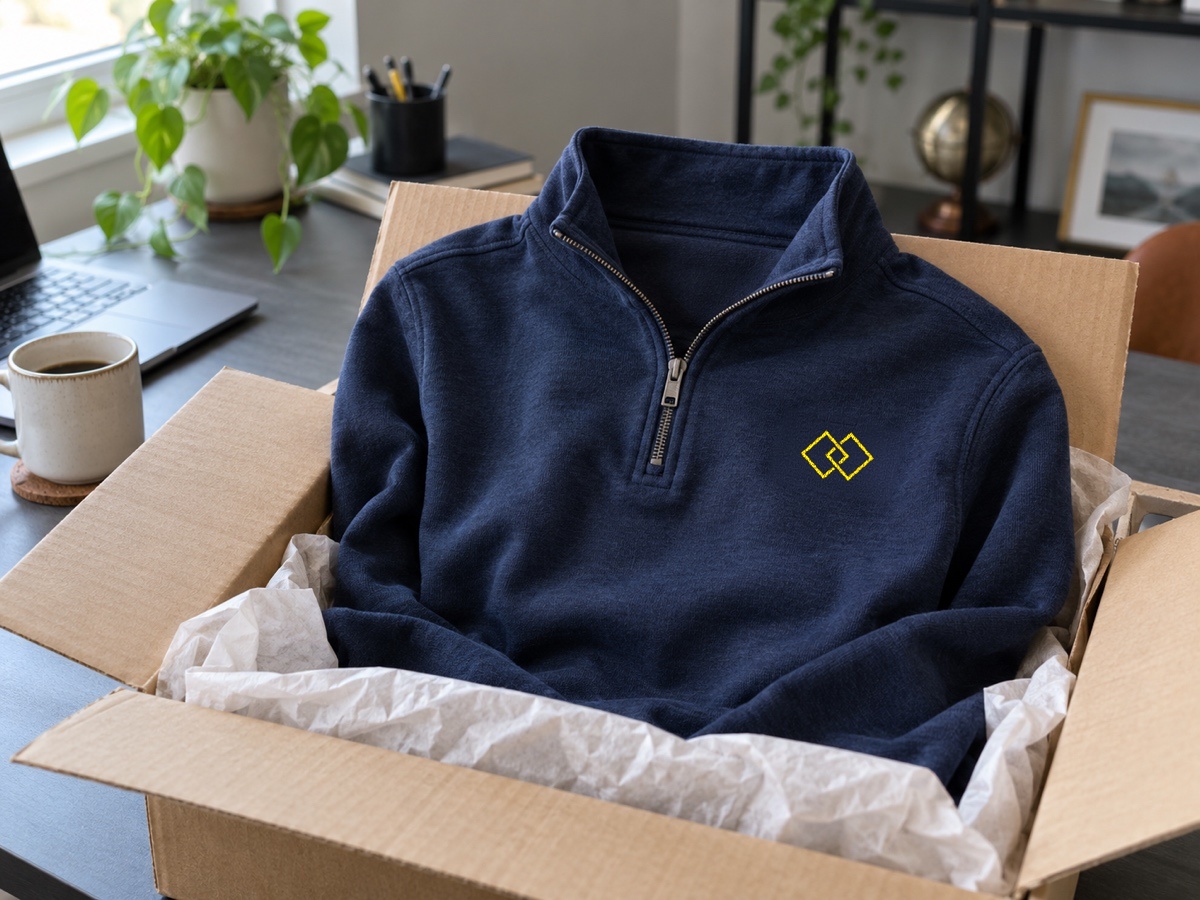
A welcome kit that arrives in a plain brown box does not read the same as one that arrives in a branded outer box with tissue paper and a clean layout inside. The presentation signals the level of thought that went into the program. It also turns the unboxing into part of the welcome.
Custom branded boxes are available at reasonable cost once the program reaches a minimum volume. For smaller programs or those with variable sizing requirements, a standard branded box or a branded envelope pouch can serve as the outer layer without the setup cost of a fully custom box.
The unboxing experience should be planned in advance. Where does the note card go? In the top layer, visible on open. What is the order of items? Apparel at the top, smaller items underneath. Is there any filler or are items packed tightly? Tight packaging with tissue paper reads better than loose items rattling around.
85%
of Canadians who keep a promotional item keep it because it is useful to have.
Research provided by the Advertising Specialty Institute, 2026.
Replenishment and program maintenance
A welcome kit program for a company that hires regularly needs to stay stocked. Running out of a key item, like the branded jacket in popular sizes, on the week that a cohort of new hires starts is a program failure. The solution is setting par levels for each item and size, with automatic replenishment orders triggered when inventory drops below a defined threshold.
For the full picture of how Willwerth Promotions builds and maintains onboarding kit programs for Canadian enterprise clients, visit the employee onboarding page or reach out to discuss your program.
Staying stocked is the whole program
Running out of the branded jacket in popular sizes during a starting cohort is the failure mode that ends welcome kit programs.
- Par levels are set per item and per size. Setting them per item alone is how a program runs out of mediums while holding plenty of stock.
- Replenishment fires on a threshold. Inventory dropping below the line triggers the order automatically.
- The stock is held ahead of each hire. Pre-stocked product is what lets a kit ship on a start date instead of a lead time.
Ask this What is the par level for each item and size, and what inventory level triggers the reorder?
Planning a welcome kit program for new hires across Canada? Let's map the items, sizing and shipping together.
Book a 30-minute callFrequently asked questions
What should I include in a new employee welcome kit in Canada?
The core items for most programs are branded apparel (a pullover or jacket), a quality branded notebook, a drinkware item, and a personal note from the hiring manager or team. Three to five items in good presentation packaging reads more intentional than a large box of generic merchandise.
How do I ship welcome kits to remote employees in Canada?
Collect sizing information during the offer acceptance flow. Work with a fulfilment partner who can ship individual kits to home addresses on a trigger tied to the start date. For companies with high hiring volume, automating the fulfilment trigger from the HRIS removes the per-hire coordination burden from HR.
How far in advance should a welcome kit arrive before the employee's start date?
One to two business days before the start date is the target. Arriving too early (more than a week) reduces the impact. Arriving after the start date is a visible failure. For remote employees, build in transit time to the address location and confirm the destination before shipping.
What is a good budget for a new hire welcome kit in Canada?
Budget follows the anchor item, since premium outerwear costs noticeably more than a hoodie or quarter-zip. We price each kit against the items and packaging you choose, and it is worth weighing that against what an early departure costs.
Can Willwerth Promotions manage ongoing welcome kit fulfilment for Canadian enterprise clients?
Yes. Willwerth Promotions maintains pre-stocked inventory for ongoing onboarding programs, handles sizing matching at fulfilment, and ships individual kits to home or office addresses across Canada. We can set up par-level replenishment so key items are reordered before they run out.