Key takeaways
- Confirm the table size with the venue first: a fitted or stretch cover is cut for one length, while a draped throw still works on a table a few inches off.
- A full four-sided throw for a six-foot table finishes at about 90 by 132 inches, and one for an eight-foot table at about 90 by 156 inches.
- Dye sublimation puts colour into the fibre edge to edge; screen printing suits a one- or two-colour logo on many matching cloths.
- Put the logo in the upper half of the front panel, and pick a closed or open back by what has to go under the table.
The cloth that looked fine in the box and sloppy on the table
A trade show tablecloth is the item people stand closest to at your booth, and it is often the last thing anyone plans. It gets ordered late and folded into a box, then unfolded at the venue onto whatever table the show supplies. One end hangs a few inches short of the floor while the other puddles, and a crease from the box runs down the middle of the logo all day.
Most of those problems were settled on the order form. The table size it was cut for and the way the logo was printed decide how it still looks at the third show. This guide covers table sizes and the cut that fits them, then what each printing method means for your budget and your artwork. It sits under our guide to choosing trade show signage, which covers how a tablecloth works alongside banners, flags and tents.
What you are choosing between
A branded trade show tablecloth comes down to two decisions made together.
- The cut. A draped throw, a fitted cover, a stretch cover or a runner over a plain cloth. This decides how the table looks from the aisle and whether staff can reach anything stored underneath.
- The print. Full-colour dye sublimation, screen printing or a heat transfer. This decides how much of the cloth can carry artwork and where the cost sits.
How to identify the tablecloth you already own
Before ordering a new one, pull the old cloth out of storage and check five things. It often turns a full reorder into a smaller one.
- Look at the corners. Sewn, boxed corners mean a fitted cover made for one table length. A flat rectangle with no seams at the corners is a throw.
- Stretch a corner between your hands. If the fabric gives and springs back, it is a stretch cover, and it only fits the table shape it was made for.
- Measure it flat. A full four-sided throw that measures around 90 by 132 inches was made for a six-foot table. One around 90 by 156 inches was made for an eight-foot table.
- Check the back panel. A full back panel hides boxes and cases under the table. A short or missing back panel lets staff sit at the table with their legs underneath.
- Run your hand over the logo. If you cannot feel it, the colour is most likely in the fibre, which is how dye sublimation works. A raised, slightly rubbery feel means ink or film sitting on top of the fabric, and that layer is the part that can crack or peel with repeated washing and folding.
Table sizes and the cloth that fits them
The standard folding table at a show is six or eight feet long, about 30 inches deep and about 30 inches high. Confirm the size with the venue before you order, because a fitted or stretch cover is cut for one length only.
A throw is sized so the fabric reaches the floor. The drop on each side equals the table height, so a full four-sided throw for a six-foot table finishes at about 90 by 132 inches, and one for an eight-foot table at about 90 by 156 inches. Because nothing is sewn to the table's shape, a throw still drapes well enough on a table a few inches off. Some suppliers also make a convertible throw that fits either length. On the shorter table the extra fabric folds in and is held with hook-and-loop strips, which turns it into a fitted look.
Counter-height and cocktail tables need their own covers. A cloth made for a standard table will sit well short of the floor on a taller one.
Fitted versus draped, option by option
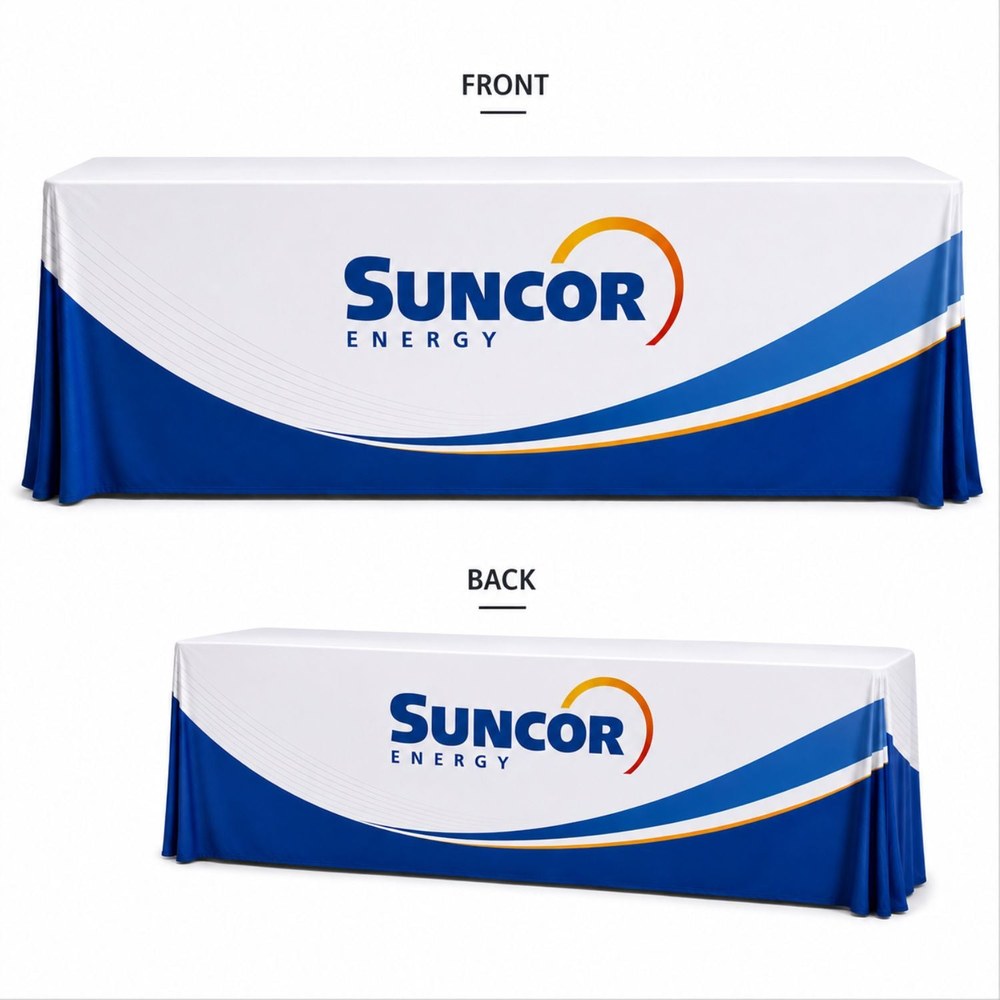
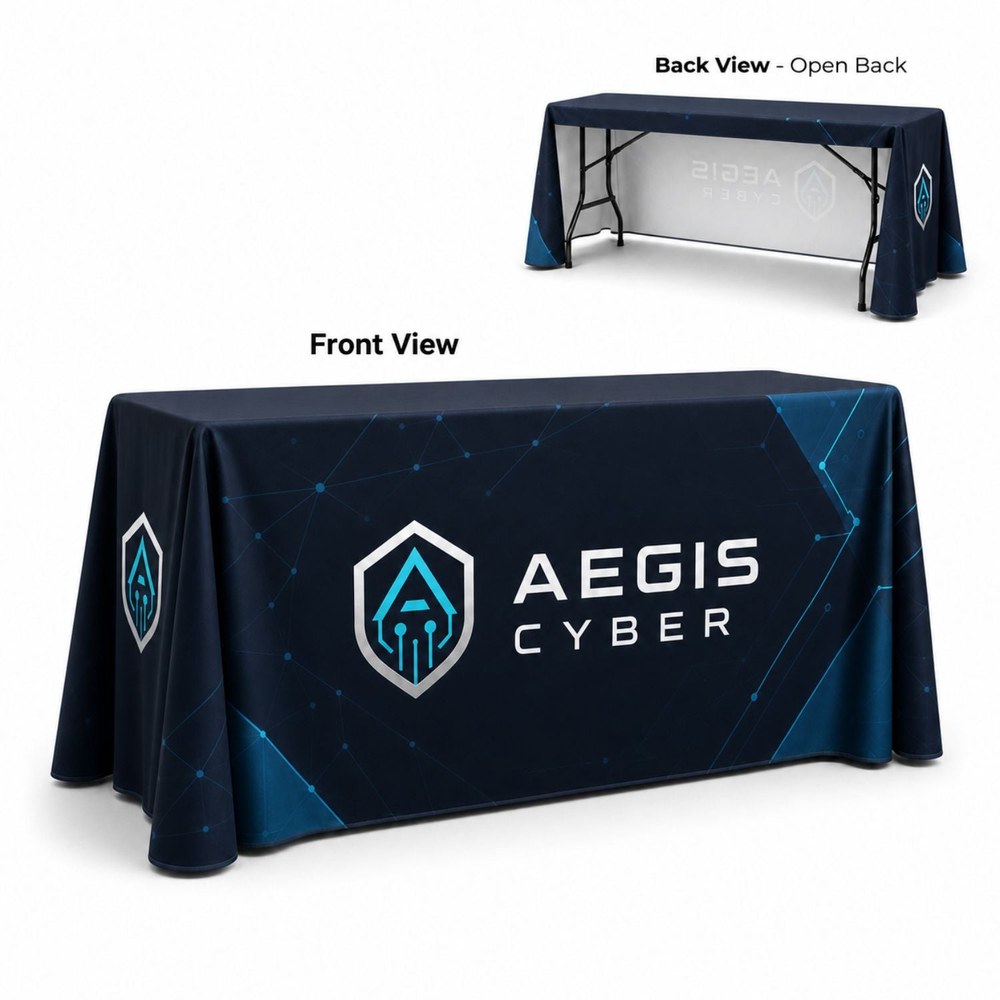
Draped throw
Lasting quality. A loose rectangle of polyester that drapes over the table and falls to the floor. With no seams or corners to wear out, a good one lasts many shows.
Common failure modes. Fabric pooling at the corners, uneven hems when the table is a different size than planned, and the logo shifting off centre when someone tugs the cloth to straighten it.
Price and value. No tailoring goes into it, so the cost follows the fabric and the print. It also copes when you do not know which table the venue will supply.
Best use. Teams that exhibit at many different venues, and anyone who wants one cover to work on more than one table.
Fitted cover
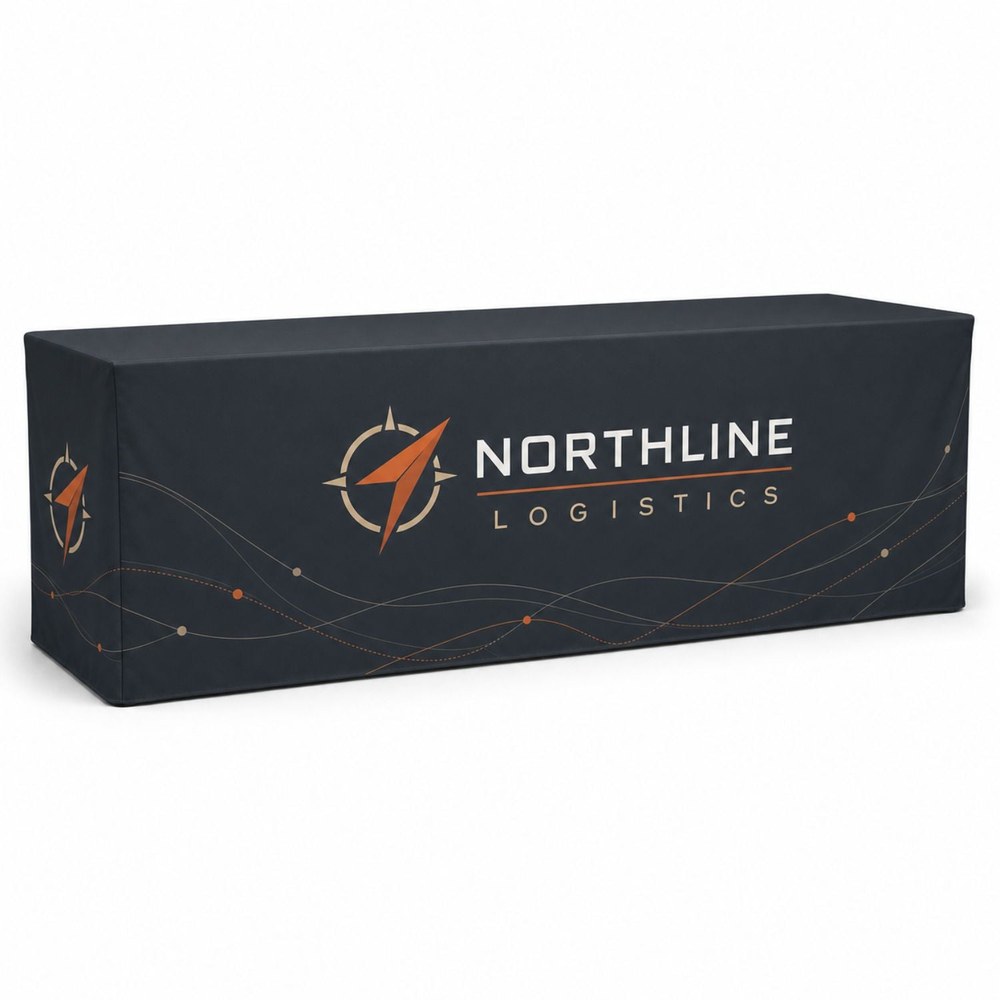
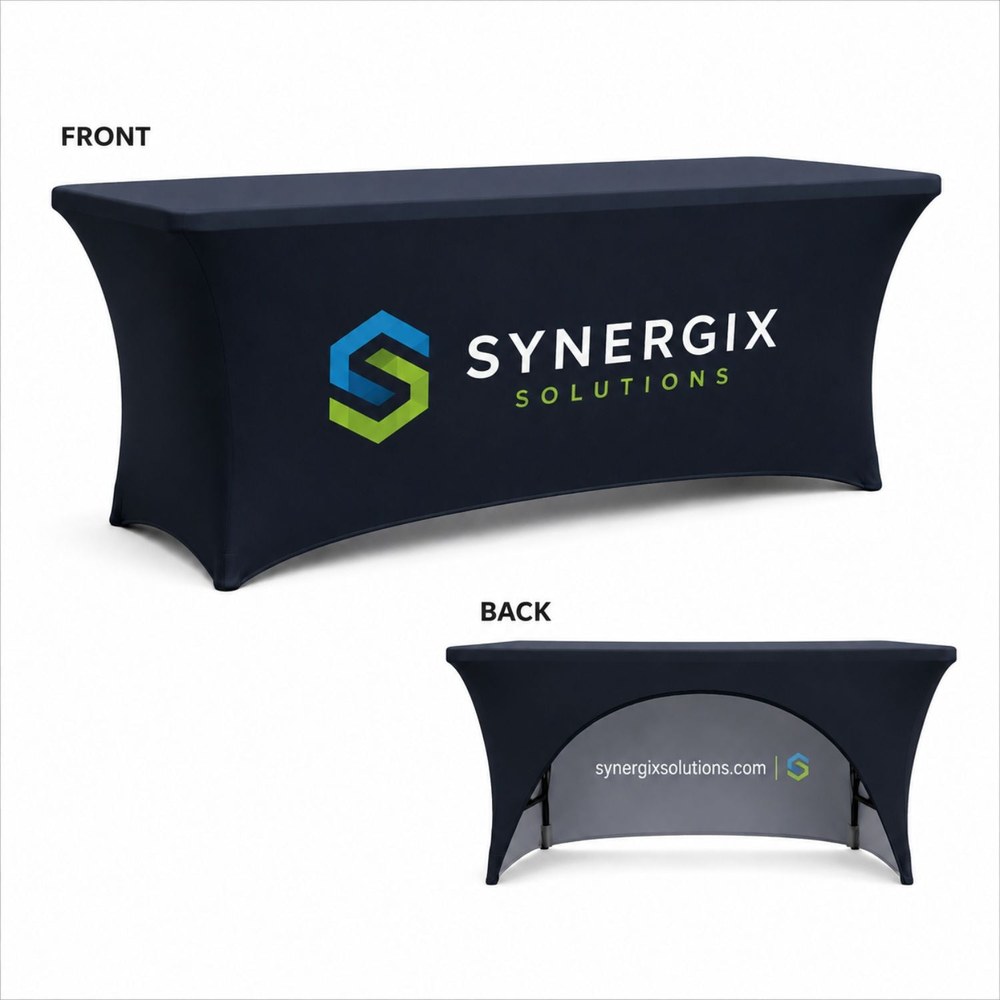
Lasting quality. Cut and sewn to one table size, with boxed corners that sit square. It looks tailored from the aisle and keeps the logo exactly where it was placed.
Common failure modes. It only fits the table it was made for. Put it on a longer table and the ends show bare, put it on a shorter one and the corners sag. Creases from storage also show more on a tight, flat panel.
Price and value. The cutting and sewing add cost on top of a throw printed the same way. Good value once you know the table length you will see at most of your shows.
Best use. A regular show calendar on the same standard table, and booths where the front panel is the main piece of branding.
Stretch cover
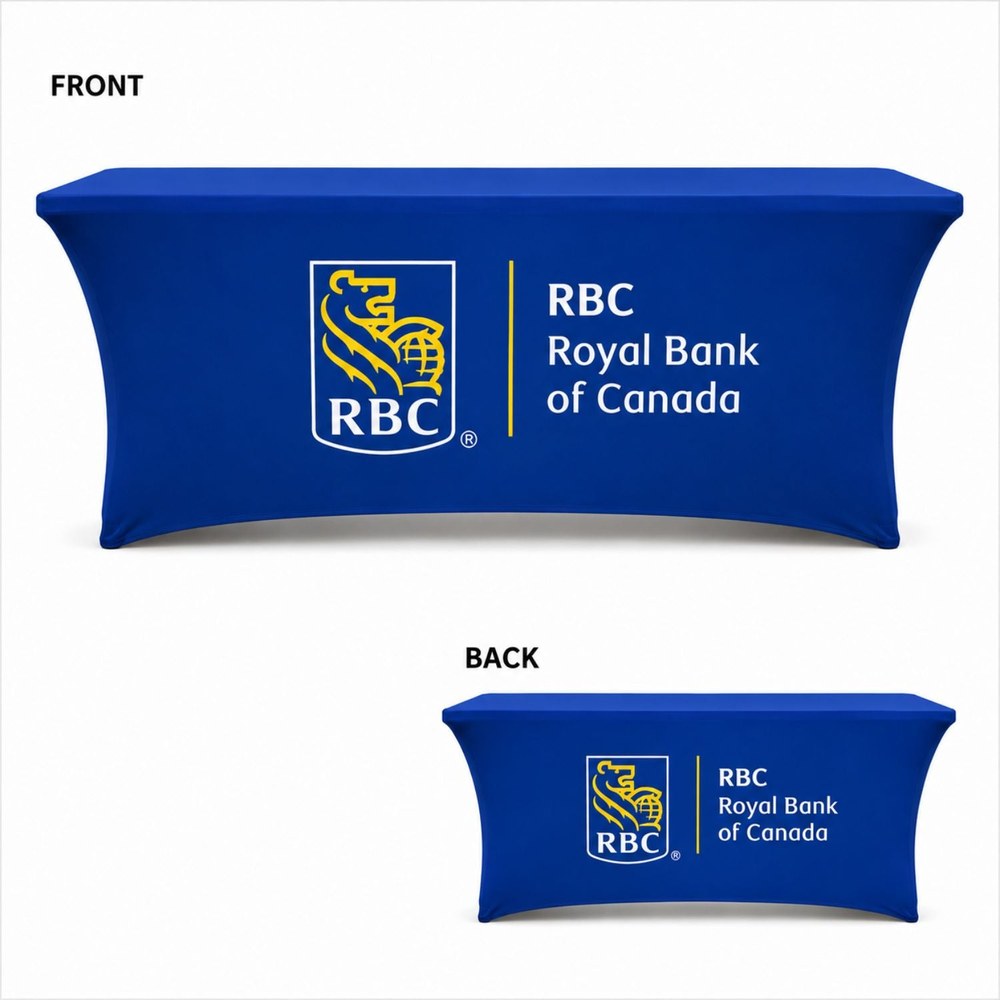
Lasting quality. Stretch fabric pulled tight over the table and hooked over the feet. It sits wrinkle-free with no fuss at setup.
Common failure modes. It traces the outline of the table legs, and anything you store underneath is hard to reach without pulling the cover off. Over time the fabric can lose some of its stretch.
Price and value. It is cut and sewn for one table like a fitted cover, so budget for it the same way. Worth it for a clean look on a table you will not store anything under.
Best use. Product display tables, demo stations and booths with a separate place for storage.
Runner
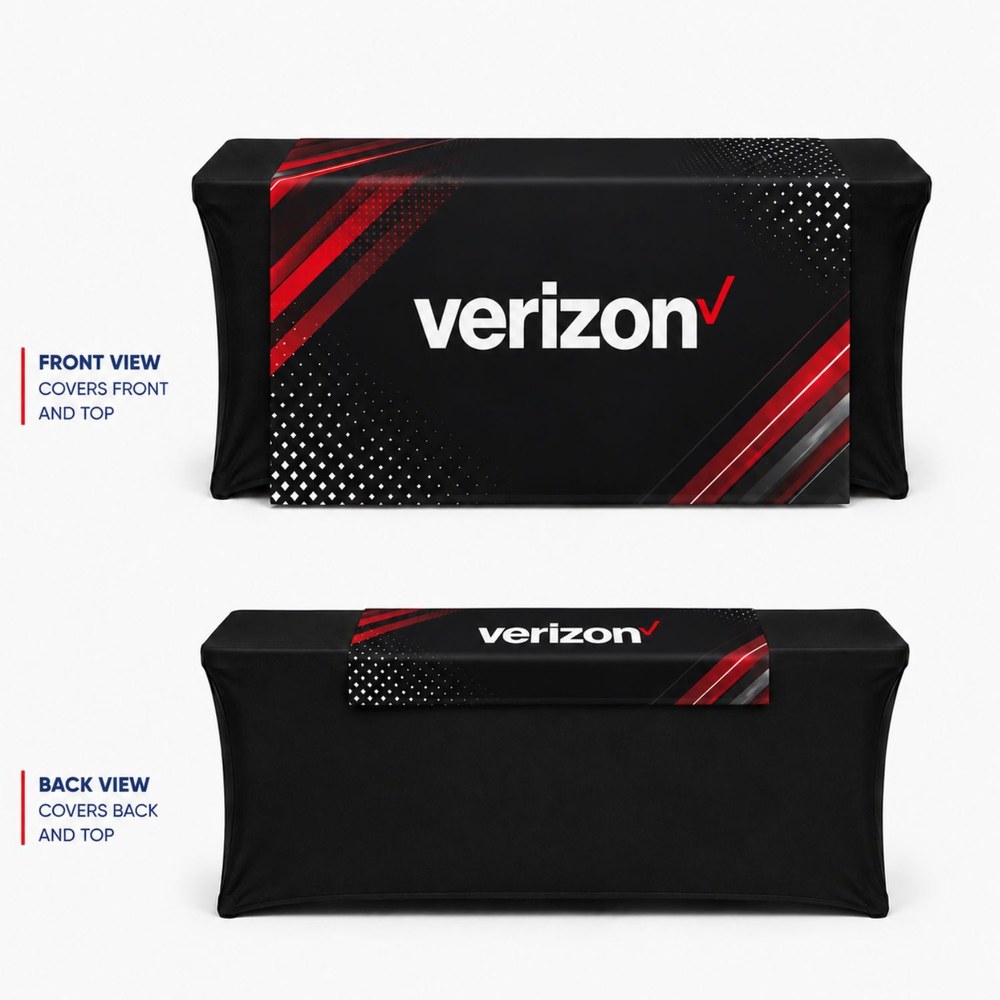
Lasting quality. A narrow printed strip, commonly around 30 inches wide, laid down the middle of the table over a plain cloth. Small enough to roll and pack with almost anything.
Common failure modes. On its own it does not hide the table or what is under it, and a plain cloth in the wrong shade underneath makes it look like an afterthought.
Price and value. Only the strip is printed and hemmed, so it carries much less printed fabric than a full cover.
Best use. Teams that already own plain cloths in a brand colour, and events where the venue dresses the tables for you.
Printing methods and what each one costs you
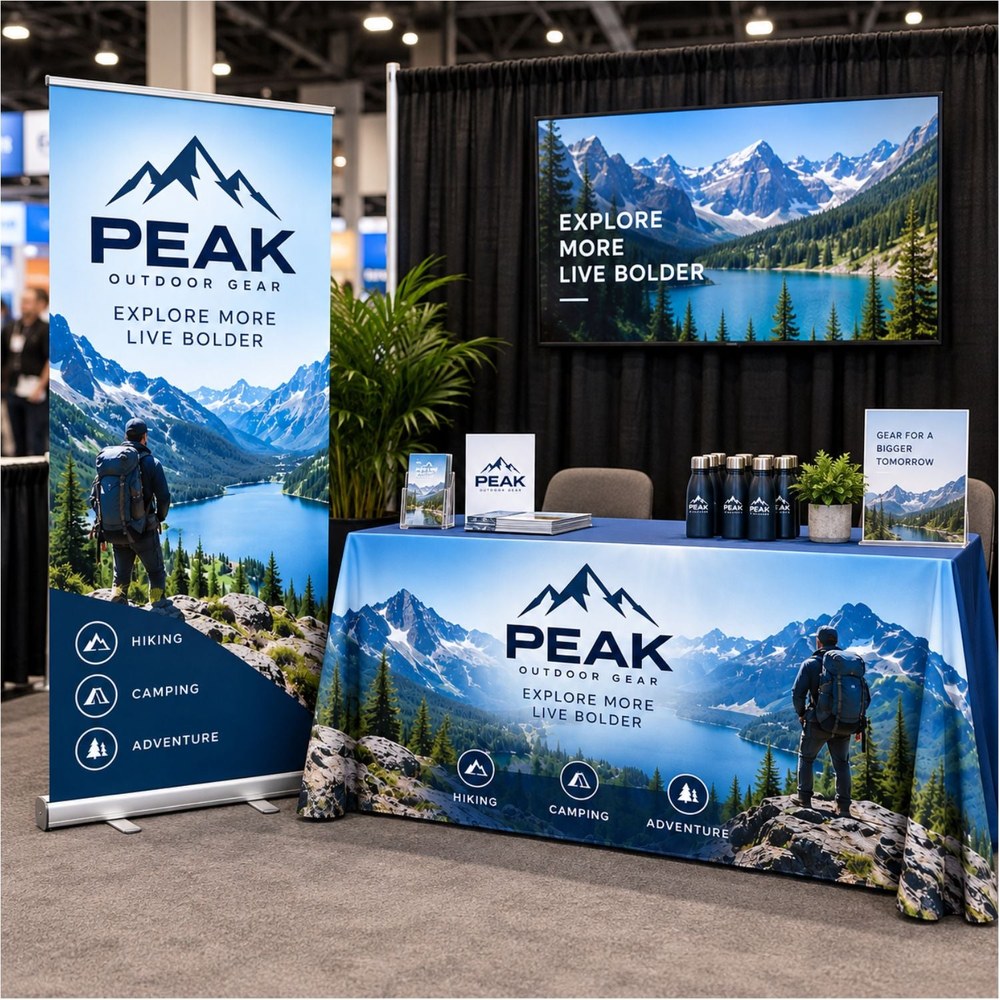
Dye sublimation. Heat turns the dye into a gas that enters the polyester fibre and sets there as it cools, so the full cloth can carry colour edge to edge, including photos and gradients. With no layer on the surface there is nothing to crack or peel, and the colour holds up well to washing. Because the whole surface is printed, the cost follows the size of the cloth, and a full design usually prices close to a small logo on the same cloth. It is the method to choose when the whole cloth is the design.
Screen printing. Ink is pushed through a screen onto a plain coloured cloth, one screen per colour. It suits a one- or two-colour logo on a solid cloth. Setup is a large part of the cost, so it gets more economical as the quantity goes up, which makes it a good fit for a matching cloth at many locations.
Heat transfer. A printed film is pressed onto the fabric. It works for very small runs and detailed artwork, but it sits on top of the cloth, and that film can crack or peel after repeated washing and folding.
Whatever the method, check that the colour in your brand guide can be matched on the fabric you choose. A precise brand colour can read slightly differently on polyester than it does on paper, so ask for a sample or a printed swatch on anything you will reorder for years.
Placement tip People standing at your table hide the bottom of the front panel, and brochures cover the tabletop within minutes. The upper half of the front panel is the part the aisle actually sees.
Logo placement and back panels
The front panel is the part people see, and the bottom of it is usually hidden by the people standing at your table. Place the logo in the upper half of the front panel. The tabletop gets covered in product and brochures within minutes, so artwork there is mostly wasted.
Choose a closed back when you need to hide boxes, bags and spare stock under the table. Choose an open back when staff will sit behind the table for long stretches, since a full back panel leaves them nowhere to put their legs. Some venues ask for proof that booth fabric is flame retardant, so request the flame-retardant certificate with the order and keep a copy in the shipping case.
Get the cut and the print right on the first order, and every later order is a reprint.
On ordering a trade show tablecloth
How to choose by goal
- Different venues every time. A convertible throw in a wrinkle-resistant polyester, so one cloth covers a six- or eight-foot table.
- The same standard table at most shows. A fitted cover with a closed back.
- A product demo or display table. A stretch cover, with storage somewhere else in the booth.
- Full-colour artwork or a photo across the cloth. Dye sublimation.
- One logo, many locations. Screen printing on a solid cloth, ordered in one run.
- A tight budget with plain cloths already on hand. A printed runner.
Quick reference: throw versus fitted cover
| What you are comparing | Draped throw | Fitted cover |
|---|---|---|
| Fit | Forgives a table a few inches off | Made for one table length |
| Look from the aisle | Soft, with folds at the corners | Square and tailored |
| What fails first | Pooling and an off-centre logo | Storage creases on a flat panel |
| What adds cost | Fabric and print only | Cutting and sewing on top of the print |
| Best use | Many different venues | A regular show calendar |
Quick reference: dye sublimation versus screen printing
| What you are comparing | Dye sublimation | Screen printing |
|---|---|---|
| Artwork | Full colour, edge to edge | One- or two-colour logo |
| Washing | Colour stays in the fibre | Holds well, can wear over time |
| Where the cost sits | In the printing of the whole cloth | In setup, spread over quantity |
| Best use | A cloth that is the design | A matching cloth at many locations |
Ordering cloths for this year's shows? Tell us your table sizes and we will match the cut and the print to them.
Book a 30-minute callFrequently asked questions
What size tablecloth fits a six-foot table?
A full four-sided throw that reaches the floor finishes at about 90 by 132 inches on a six-foot table and about 90 by 156 inches on an eight-foot table. Confirm the table size with the venue before ordering, because a fitted or stretch cover is cut for one length only.
Should I choose a fitted cover or a draped throw?
A draped throw suits teams that exhibit at many different venues, since it still works on a table a few inches off. A fitted cover suits a regular show calendar on the same standard table, where a square, tailored front panel is worth the extra sewing.
Which printing method holds up best to washing and folding?
Dye sublimation. The colour sets inside the polyester fibre, so there is no surface layer to crack or peel. Screen printing holds well and suits a one- or two-colour logo; a heat transfer film can crack after repeated washing and folding.
Do venues ask for flame-retardant tablecloths?
Some do. Request the flame-retardant certificate with the order and keep a copy in the shipping case, so it is on hand if the venue asks at setup.
What this means for your program
Nearly every decision about a tablecloth gets made on the first order. Once the table size and the cut are settled and the artwork is approved on the right fabric, every later order is a reprint of a file you already signed off. Willwerth Promotions specifies tablecloths inside its trade show and event merchandise programs, so the cloth is planned alongside the banners and giveaways it will sit beside.
Which tablecloth fits your program?
Tell us the table sizes you usually get and how many shows or locations need a cloth this year. If there are cloths in storage, send a photo of each and we will tell you which are worth keeping and which need a reprint, with real pricing against each line. Reach out to Willwerth Promotions here.